
A Nation Rich in Natural Resources
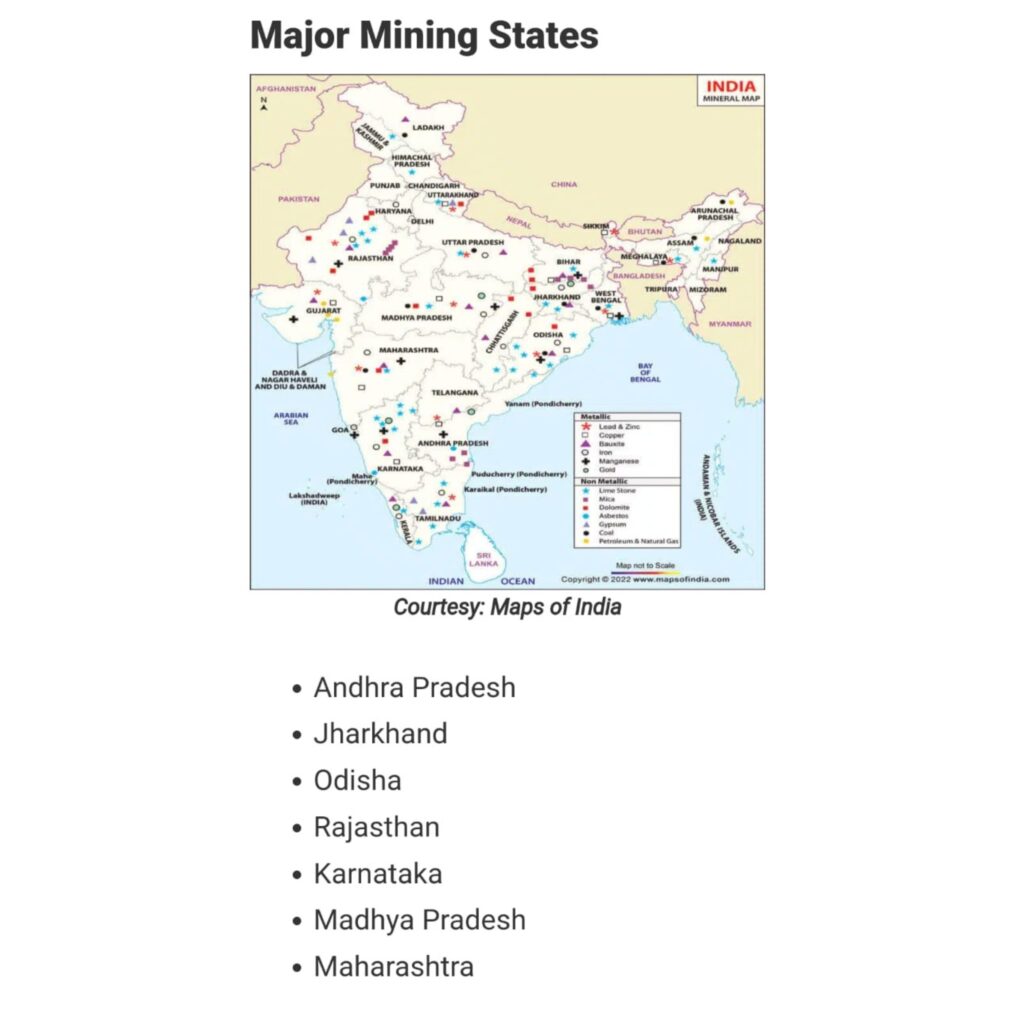
India is endowed with vast and diverse mineral resources that form the backbone of its industrial and economic development. From metallic and non-metallic minerals to energy and beach sand minerals, the country’s geological diversity supports a wide range of industries including infrastructure, manufacturing, power, and technology.
India’s mineral wealth is distributed across different geological regions, reflecting its complex and ancient geological history. These resources play a crucial role in supporting domestic industries and contributing to global supply chains.
Major Mineral Resources in India
India is a leading producer of several important minerals, including:
Iron Ore – Essential for steel and infrastructure development
Bauxite – Primary source of aluminum
Coal – A major energy resource
Limestone – Key raw material for cement production
Manganese & Chromite – Important for alloy and steel industries
Copper, Zinc & Lead – Vital for electrical and industrial applications
Beach Sand Minerals – Ilmenite, Rutile, Zircon, Monazite
Key Mineral Belts
India’s mineral wealth is concentrated in well-defined belts such as:
The Chotanagpur Plateau
The Odisha–Jharkhand–Chhattisgarh belt
The Dharwar Craton
The Aravalli Range
The Eastern & Western Coastal belts
These regions host significant reserves of metallic, non-metallic, and placer minerals.
Economic & Strategic Importance
Mineral resources are vital to India’s economic growth, infrastructure expansion, and industrial self-reliance. They support key sectors such as steel, cement, power generation, renewable energy, electronics, and defense manufacturing.
With increasing focus on sustainable mining, technological innovation, and regulatory reforms, India is strengthening its position as a responsible and reliable mineral producer.
Sustainable Development & Future Outlook
India is committed to balancing mineral development with environmental protection and social responsibility. Sustainable mining practices, efficient resource utilization, and responsible rehabilitation are central to the future of India’s mineral sector.